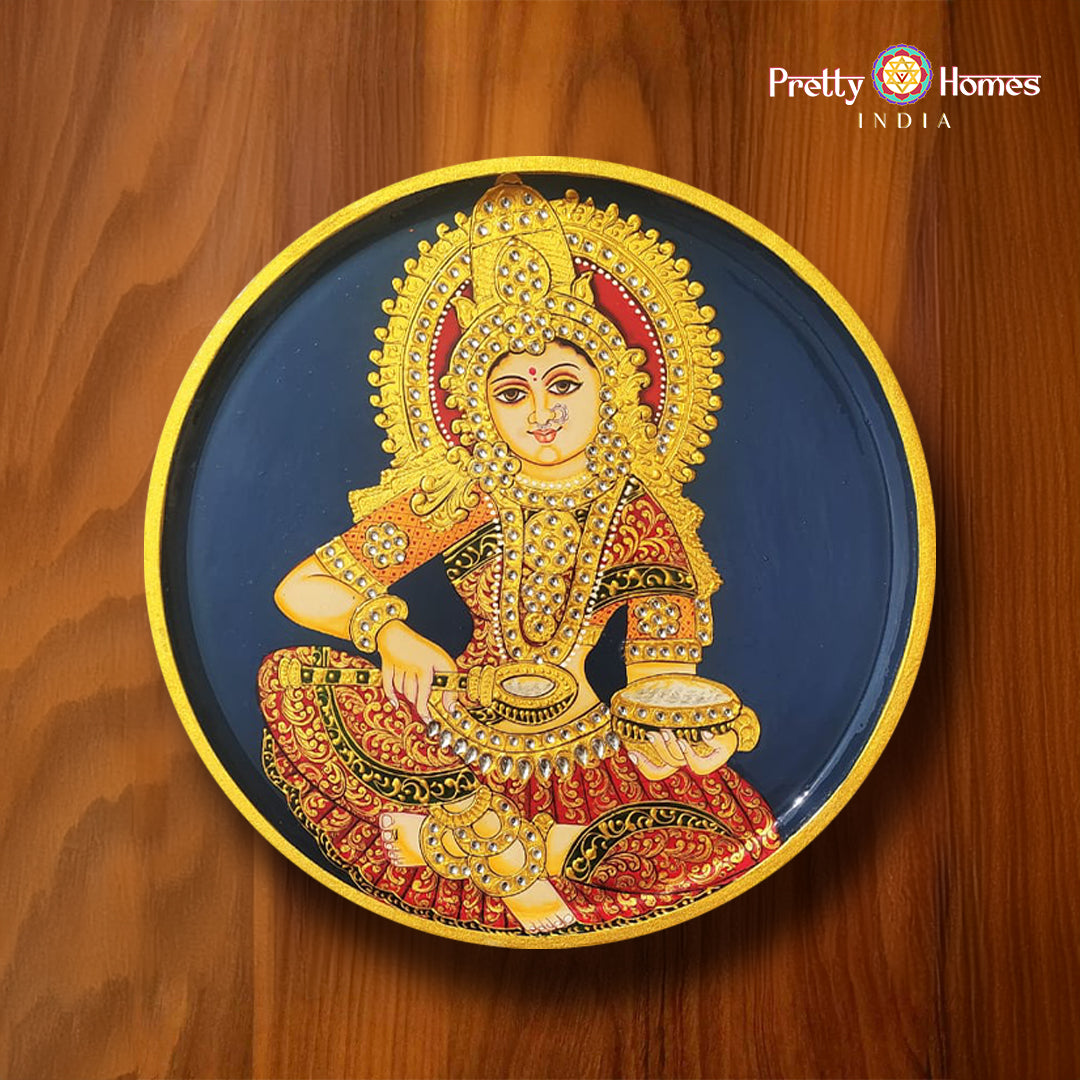
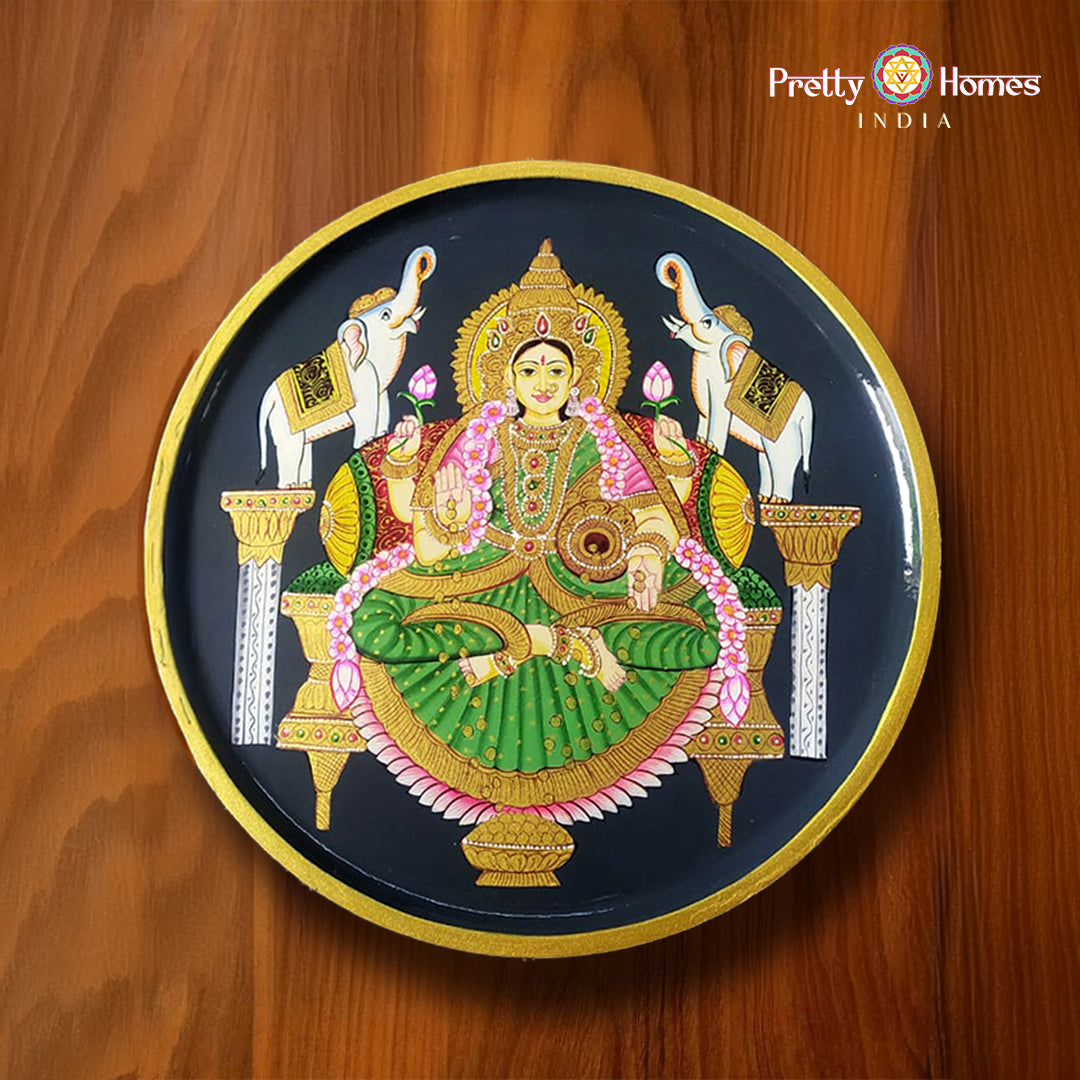
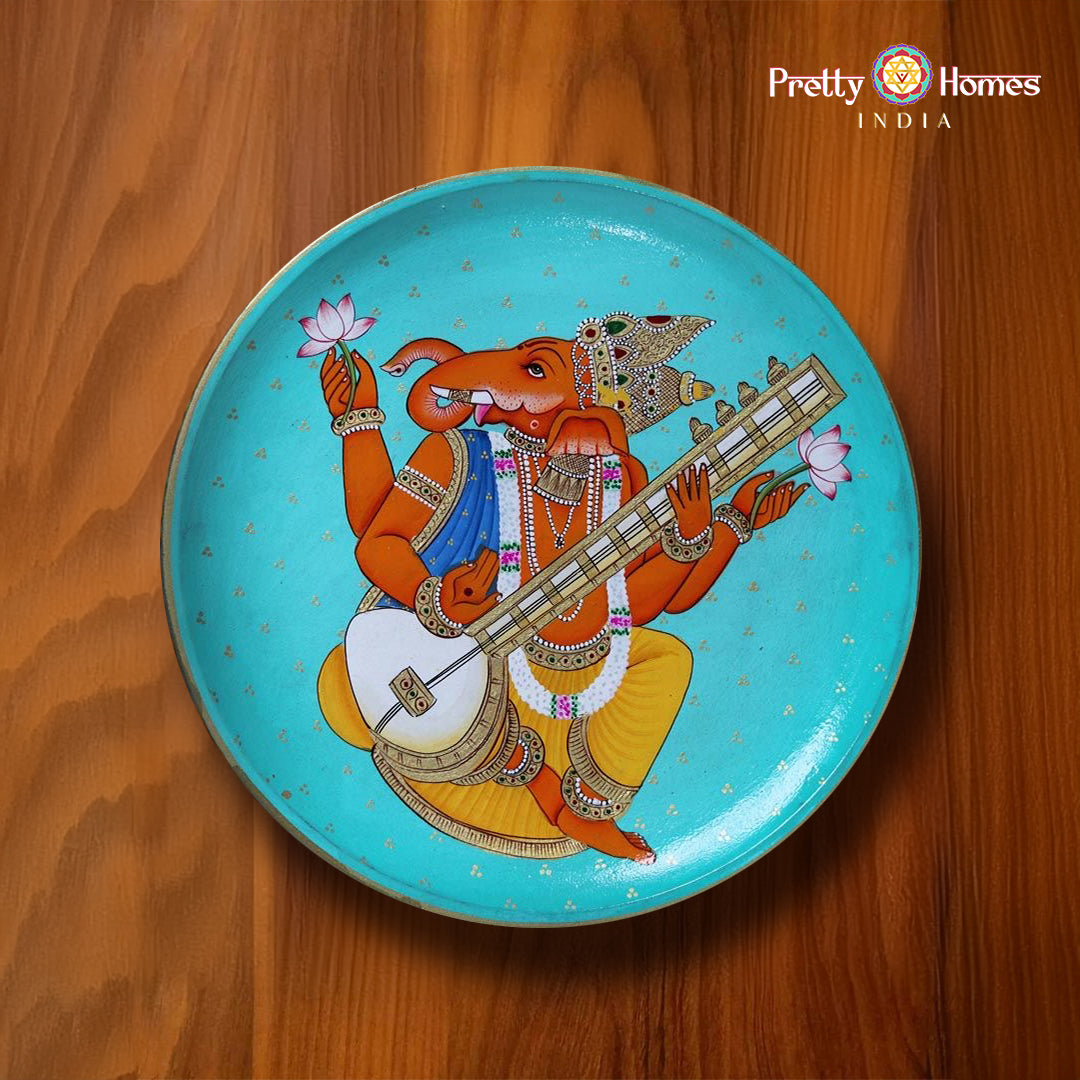
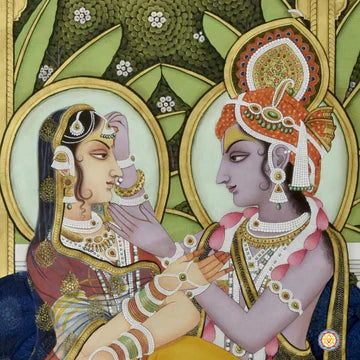
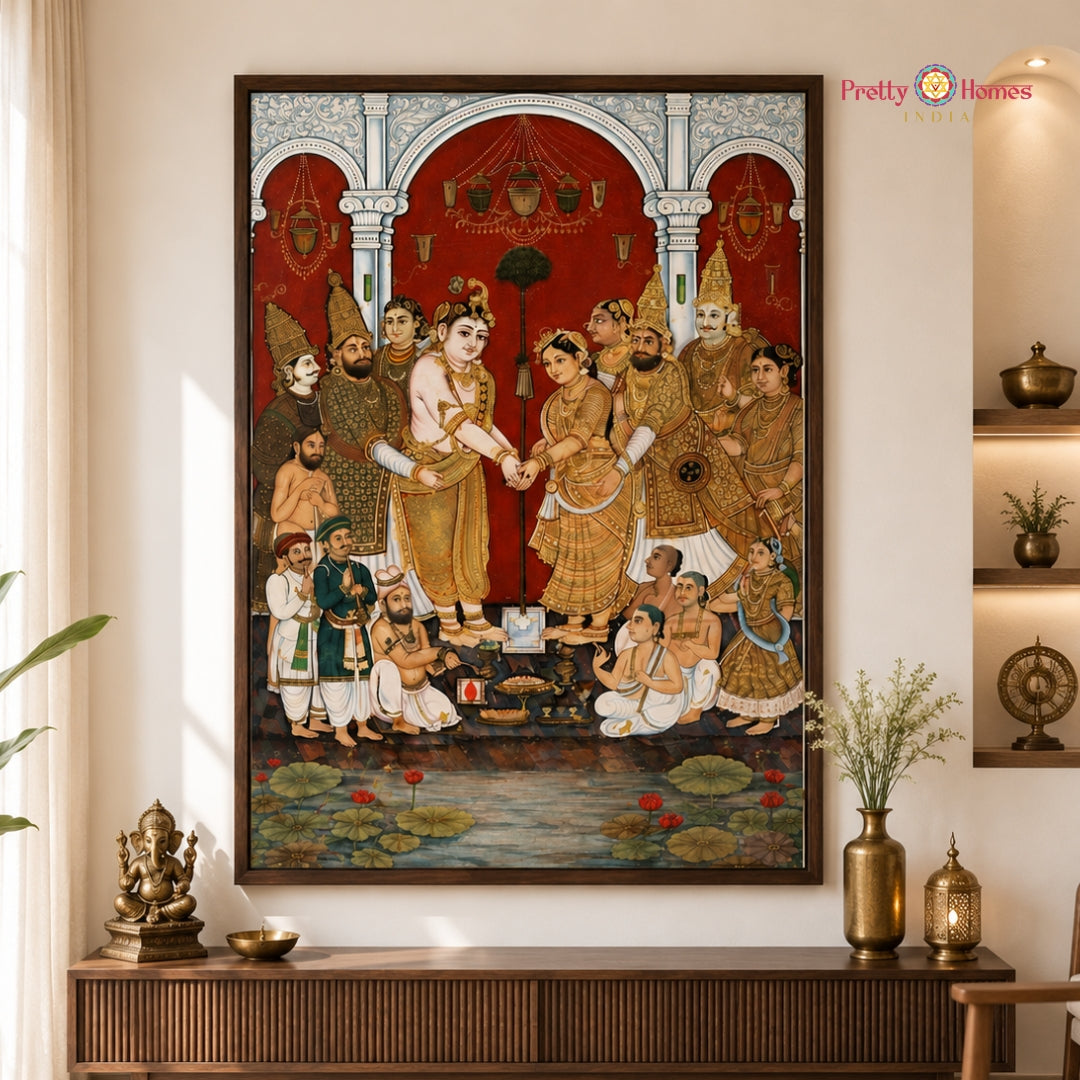
There is a certain calmness found in Nathdwara art. Rooted in temple culture and sacred imagery, these paintings were created as visual expressions of worship, ritual, and storytelling.
Originating in Nathdwara, Rajasthan, the style is closely associated with Shrinathji, a form of Lord Krishna worshipped in the Pushtimarg sect. Over time, Nathdwara artists developed a visual language distinguished by intricate ornamentation and richly layered compositions.
Today, Nathdwara art continues to influence contemporary Indian interiors through handpainted Pichwai artworks and devotional wall pieces.
How Nathdwara Art Influenced Pichwai Paintings
Pichwai paintings emerged as an important part of the Nathdwara style, originally created as textile backdrops displayed behind the idol of Shrinathji within temple spaces.
These artworks gradually evolved into detailed handpainted compositions featuring narratives, intricate borders, pastoral scenes, and symbolic motifs drawn from Krishna traditions.
Many modern Pichwai artworks still retain these classical Nathdwara elements:
This relationship between Nathdwara art and Pichwai painting continues to shape how these artworks are understood and appreciated today.
Common Motifs in Nathdwara Art
Shrinathji Darshan

Shrinathji remains the central figure within many Nathdwara-inspired artworks, often depicted in ceremonial darshan compositions framed by intricate ornamentation.
Lotus Motifs

Lotus flowers symbolize purity while also adding rhythm and decorative balance to the artwork.
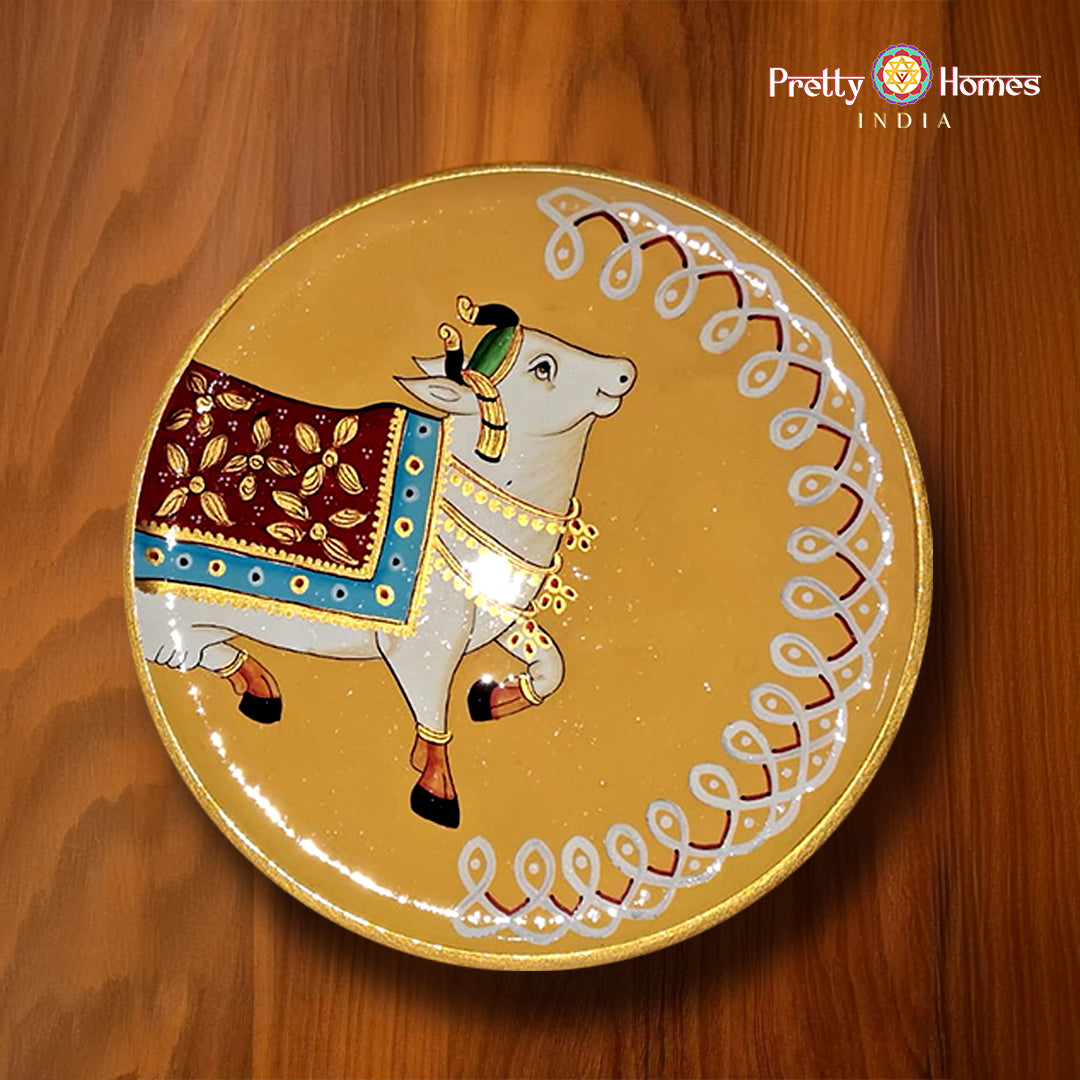
Sacred Cows

Cow motifs frequently appear within pastoral Nathdwara compositions, representing abundance, gentleness, and Krishna’s association with Gokul traditions.
Peacock Elements

Peacocks introduce movement and ornamentation into the composition, especially within monsoon and festive-themed artworks.
Final Thoughts
Nathdwara art remains relevant because of its ability to bring symbolism, craftsmanship, and visual richness into modern interiors.
Whether through detailed Pichwai paintings, lotus compositions, or ceremonial Shrinathji artworks, these traditions continue to connect sacred Indian artistry with contemporary homes.
Frequently asked questions:
What is Nathdwara art?
Nathdwara art is a traditional Indian painting style associated with Shrinathji worship and the temple traditions of Nathdwara, Rajasthan.
What is the difference between Nathdwara art and Pichwai painting?
Pichwai paintings originated within the Nathdwara tradition as textile backdrops for temple worship, while Nathdwara art refers more broadly to the artistic style and devotional imagery associated with the region.
What are common motifs in Nathdwara paintings?
Common motifs include Shrinathji darshan scenes, lotus flowers, sacred cows, peacocks, temple pavilions, and Raas Leela compositions.