There are paintings that decorate a wall…
And then there are paintings that fill a room with presence.
Pichwai art belongs to the second kind.
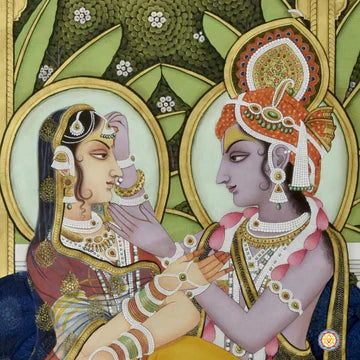
One glance at a Pichwai painting: the blooming lotuses, the gentle cows, the jeweled ornaments, the serene eyes of Shrinathji — and you instantly feel a sense of calm, devotion, and beauty that goes far beyond décor.
For over 400 years, Pichwai paintings have been the heartbeat of Nathdwara, Rajasthan — a sacred art form born inside temple walls and now celebrated across the world.
This blog takes you into the story of Pichwai art:
its origins, meaning, techniques, symbolism, types, and why it continues to captivate art lovers and collectors today.
The Origin Story of Pichwai: A Temple Needed a Painting

To understand Pichwai, you have to imagine Nathdwara in the 17th century.
Inside the Shrinathji Temple, the priests would change the décor every season and festival. But the walls behind the deity felt empty—plain cloth couldn’t express the divine moods of the day’s darshan.
So the temple called upon local artists.
Painters with delicate hands.
Storytellers with brushes.
Their mission:
Create large, detailed narrative paintings that show Krishna’s life, festivals, and leelas; so even those who couldn’t read could understand the stories at a glance.
What began as a temple necessity soon became a legacy.
This is how Pichwai art (meaning “back-hanging”) was born — not as décor, but as devotion.
What Makes Pichwai Painting Special?
Pichwai is more than a style, it’s a visual language of devotion.
It portrays:
-
Shrinathji (Krishna lifting Govardhan)
-
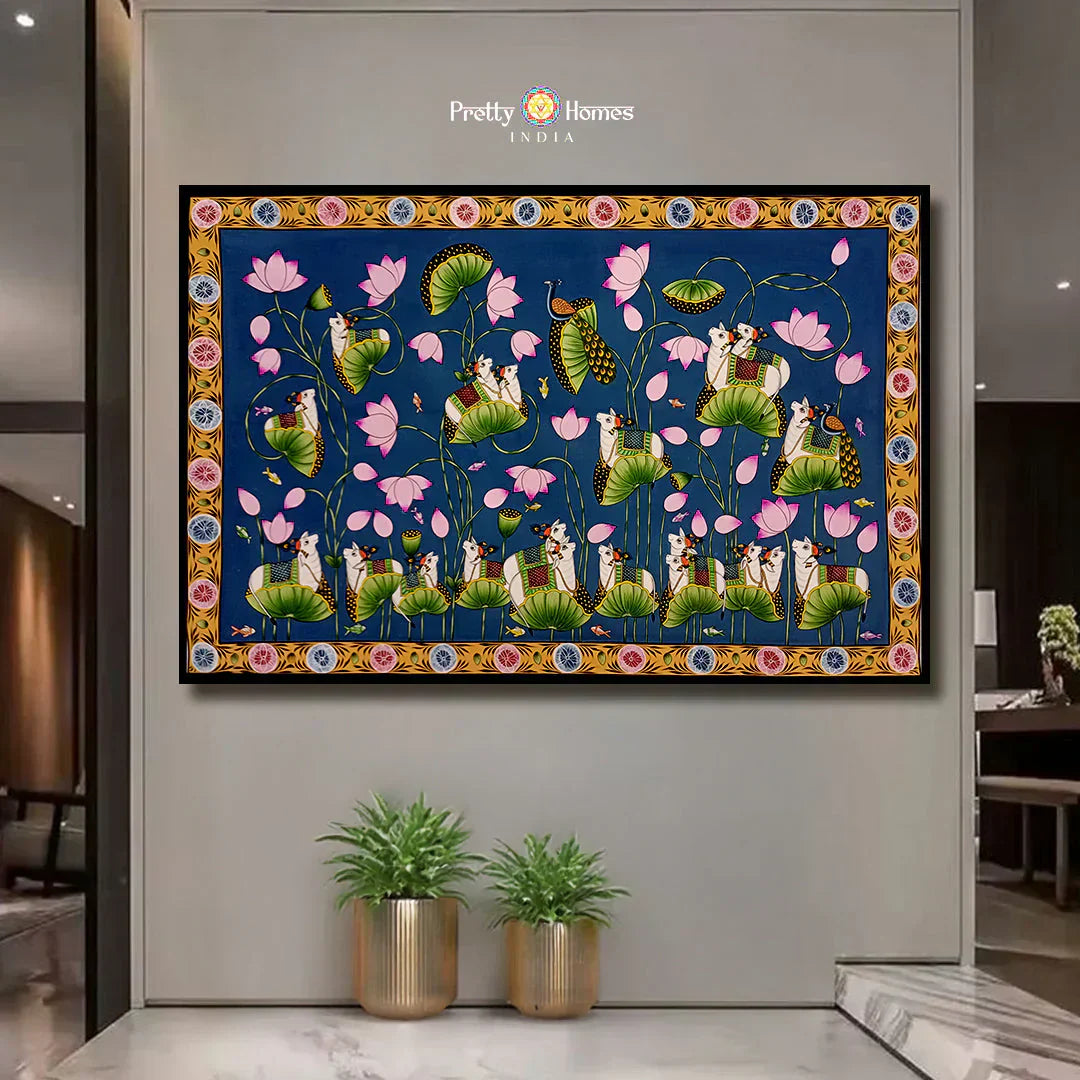
Cows (symbols of purity and abundance)
-
Lotuses (symbolising spiritual awakening)
-
Peacocks (joy and celebration)
-
Festivals and moonlit nights
-
Seasons of Vrindavan
Each detail has meaning.
Each motif has a purpose.
Each artwork is a prayer in color.
If you’ve ever seen a Lotus Pichwai painting or a Cow Pichwai, you know how mesmerizing the detailing can be: thousands of tiny hand-painted strokes forming patterns, borders, textures, and ornaments.
How Pichwai Paintings Are Made: An Art of Patience
Creating an authentic Pichwai is a meditative process.
It can take weeks or even months.
Here’s how it unfolds:
1. Preparing the Canvas
Cotton, linen, or silk is washed, stretched, and treated by hand.
2. Sketching the Layout
Artists lightly draw the composition: Shrinathji, lotuses, cows, moon, ornaments, and Vrindavan landscapes.
3. Base Colors
Natural pigments made from:
-
minerals
-
flowers
-
stones
-
neem, haldi, indigo
-
and even gold & silver
…are applied in layers.
4. Detailing (the heart of Pichwai)
This is where the magic happens:
fine lines, dots, ornaments, patterns, borders, jewellery, and facial expressions.
5. Final Highlights
Gold leaf, white accents, and miniature detailing bring the artwork to life.
An authentic Pichwai has a soul; something a print simply cannot recreate.
Symbolism Inside Pichwai Art (What Each Element Means)
Pichwai paintings are filled with spiritual meaning.
Some common motifs and what they represent:
Lotuses:
Purity, devotion, enlightenment
(Lotus Pichwai art is the most popular modern style)

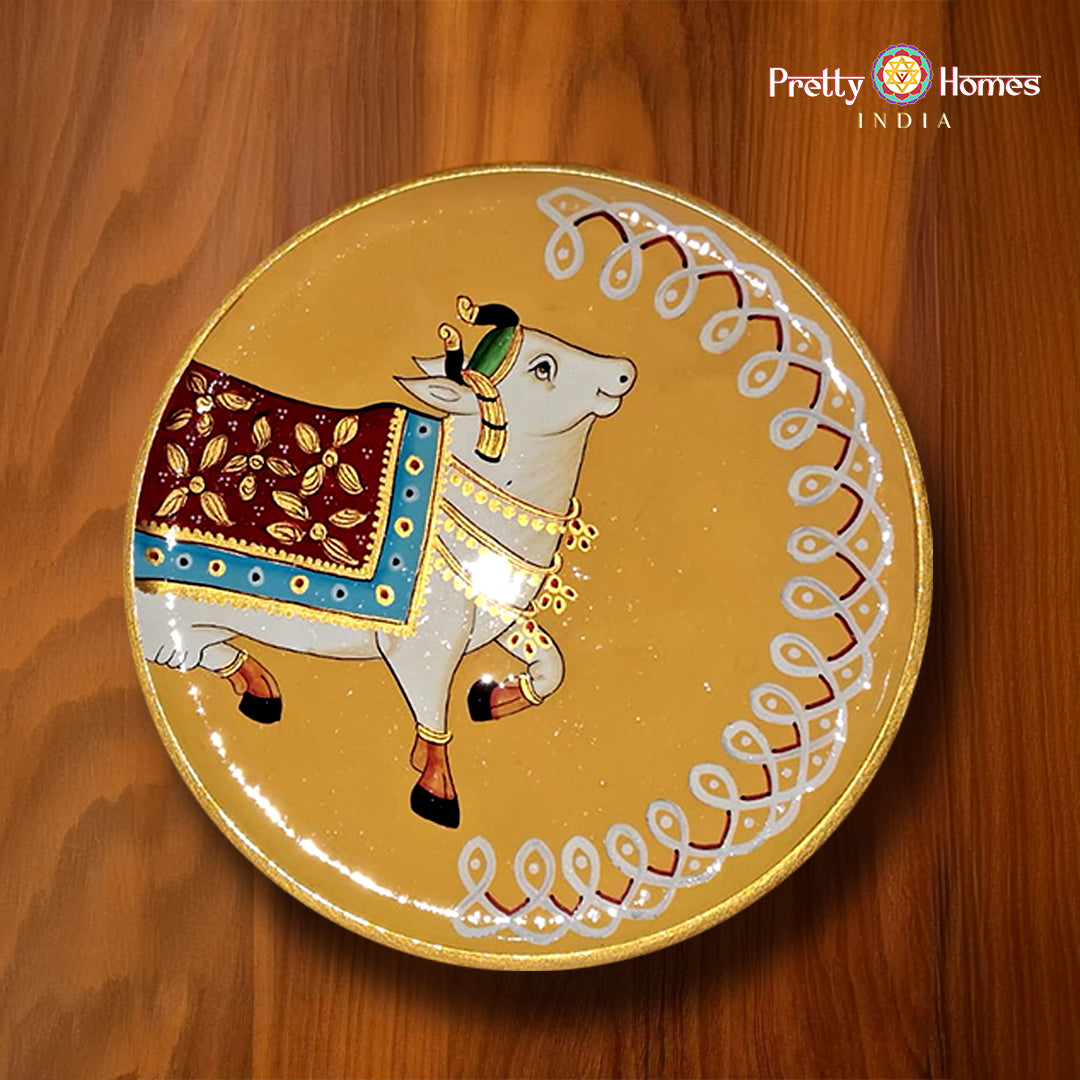
Cows:
Love, gentleness, Krishna’s companions
(Cow Pichwai = peaceful home energy)

Peacocks:
Joy, music, monsoon, celebration

Moon:
Symbol of Sharad Purnima and divine love

Ornaments & Garlands:
Auspiciousness, beauty, devotion

Nothing in a Pichwai is random.
Everything is intentional.
Popular Types of Pichwai Paintings
Here are the classic themes you’ll see across temples, galleries, and modern interiors:
1. Lotus Pichwai Painting
Pastel or vibrant lotuses surrounding Shrinathji.
Perfect for modern homes.
2. Govardhan Leela Pichwai
Krishna lifting the mountain: a powerful devotional theme.
3. Cow Pichwai (Gau Pichwai)
Rows of divine cows painted with intricate details.
4. Raas Leela Pichwai
Krishna dancing with gopis under the moon.
5. Annakoot Pichwai
Celebrating the festival of food offering.
6. Jal Vihar (Monsoon Pichwai)
Fresh blues and greens representing water festivities.
7. Sharad Purnima Pichwai
Soft whites and silvers of the divine moonlit night.
The Artists of Nathdwara: Keepers of a 400-Year Tradition
Walk through Nathdwara’s narrow lanes, and you’ll hear the gentle scrape of paintbrushes.
Inside small homes-turned-studios, generations of artists still practice this craft.
The guru–shishya tradition lives here.
Children watch their parents paint.
Masters guide apprentices.
Every piece is a collaborative effort.
Many artists spend 3–6 months on one large Pichwai.
They do it not for money — but for devotion.
This is what makes authentic Pichwai art priceless.