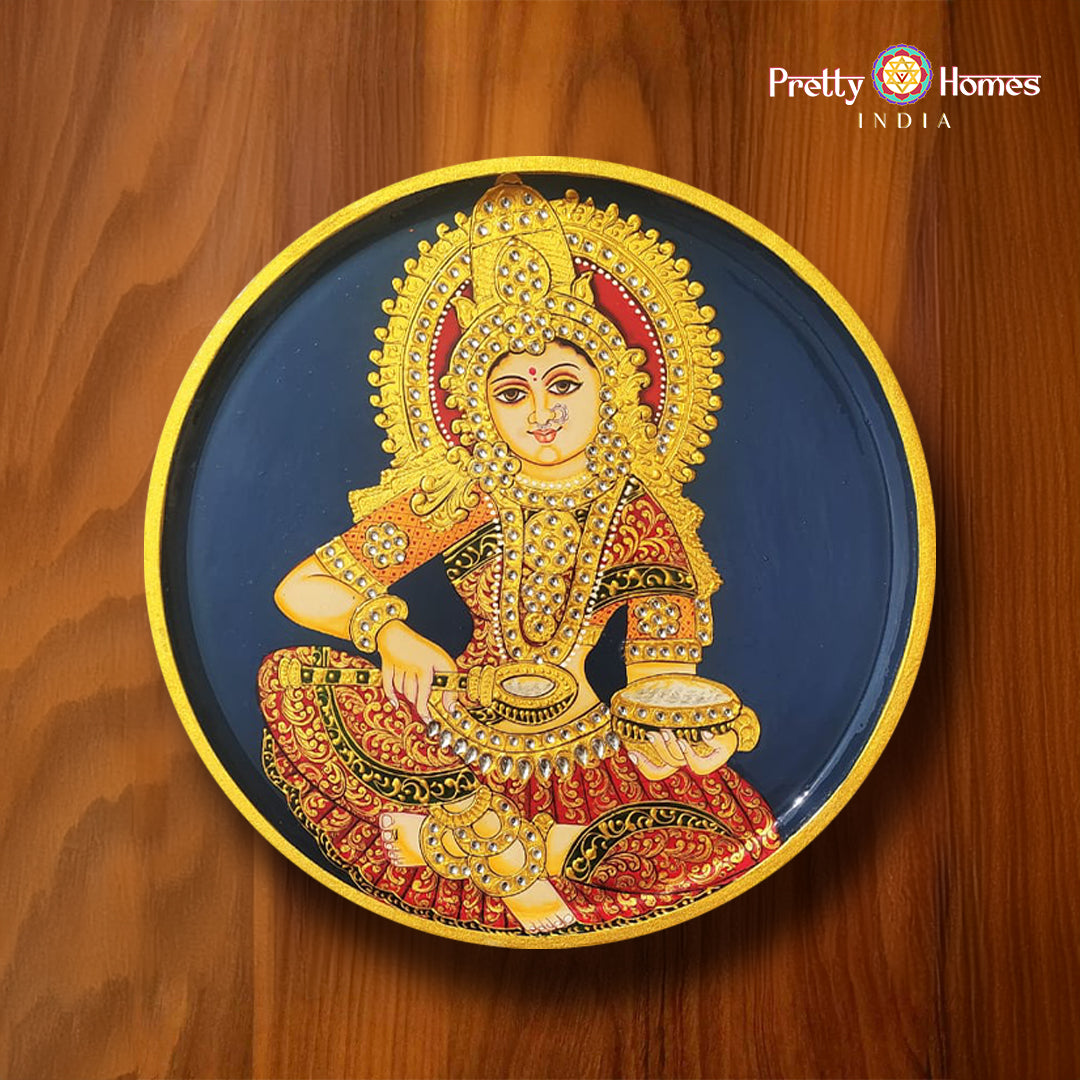
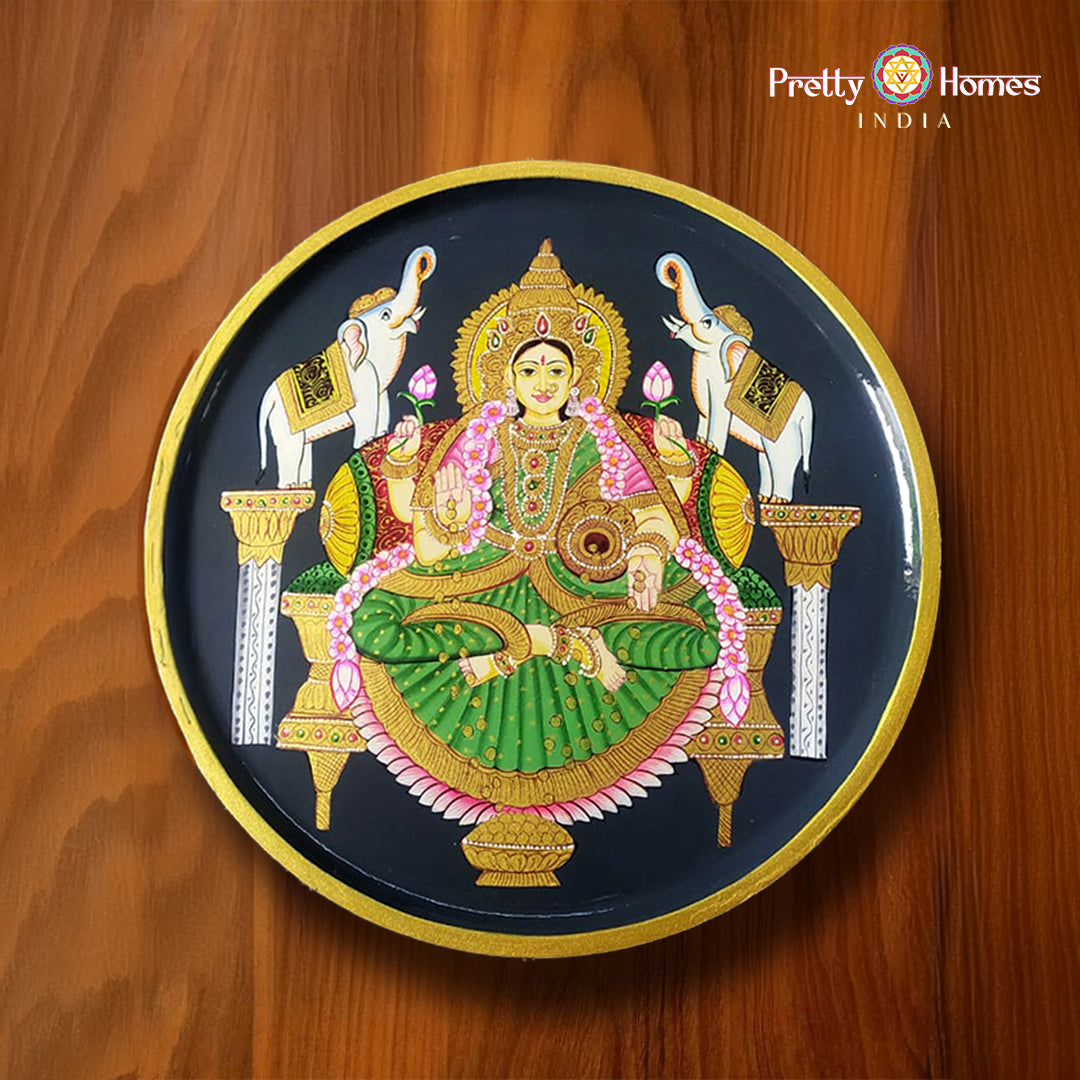
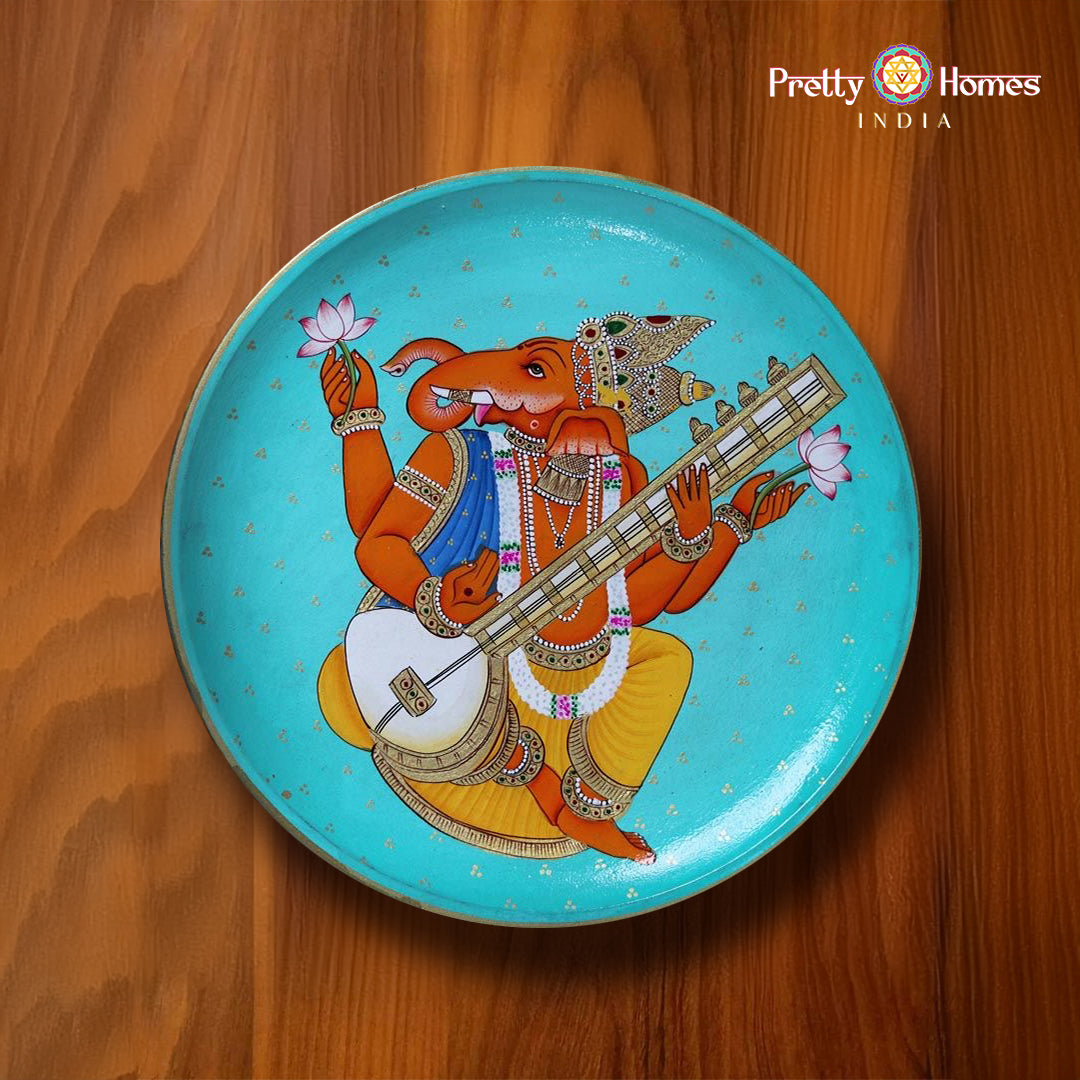
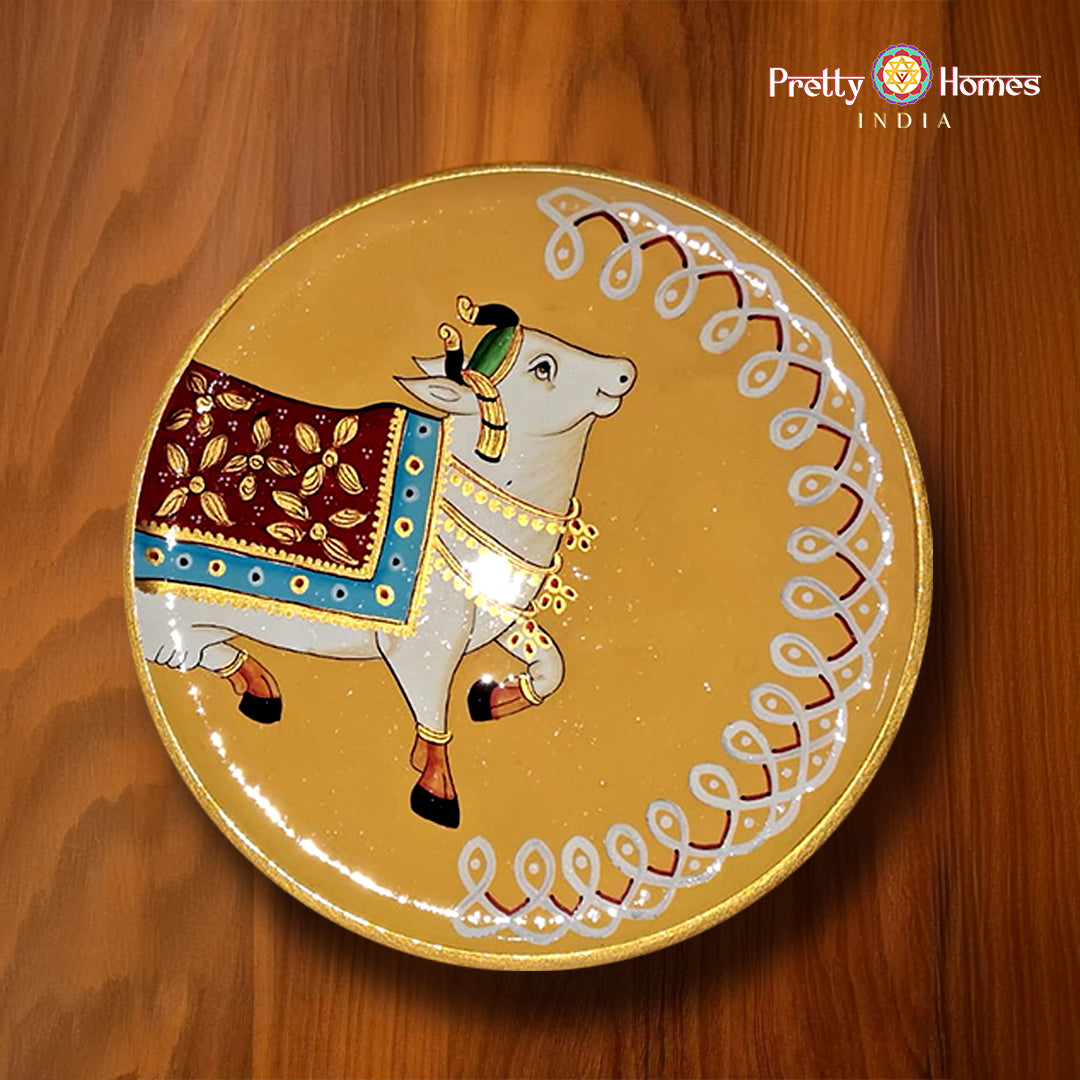
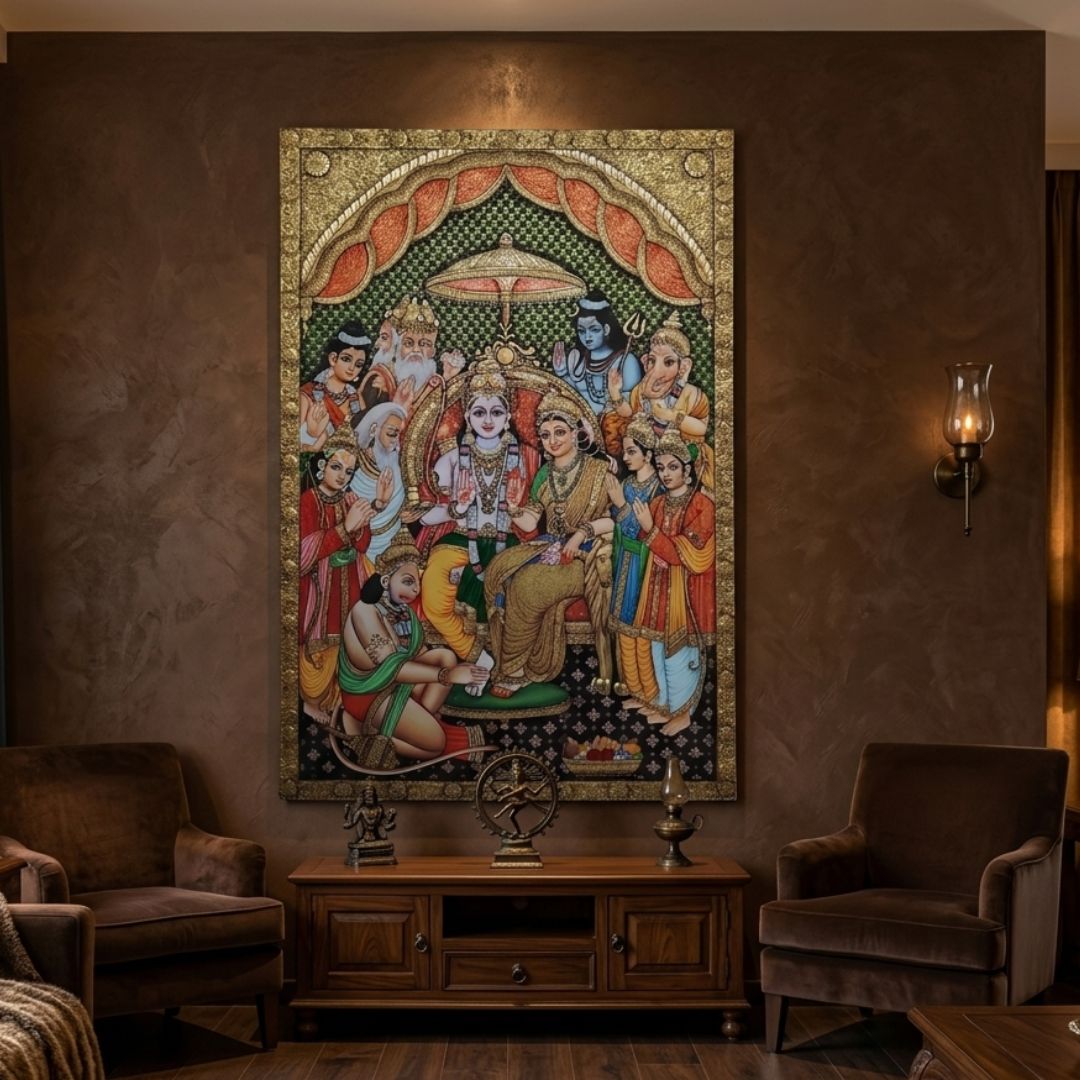
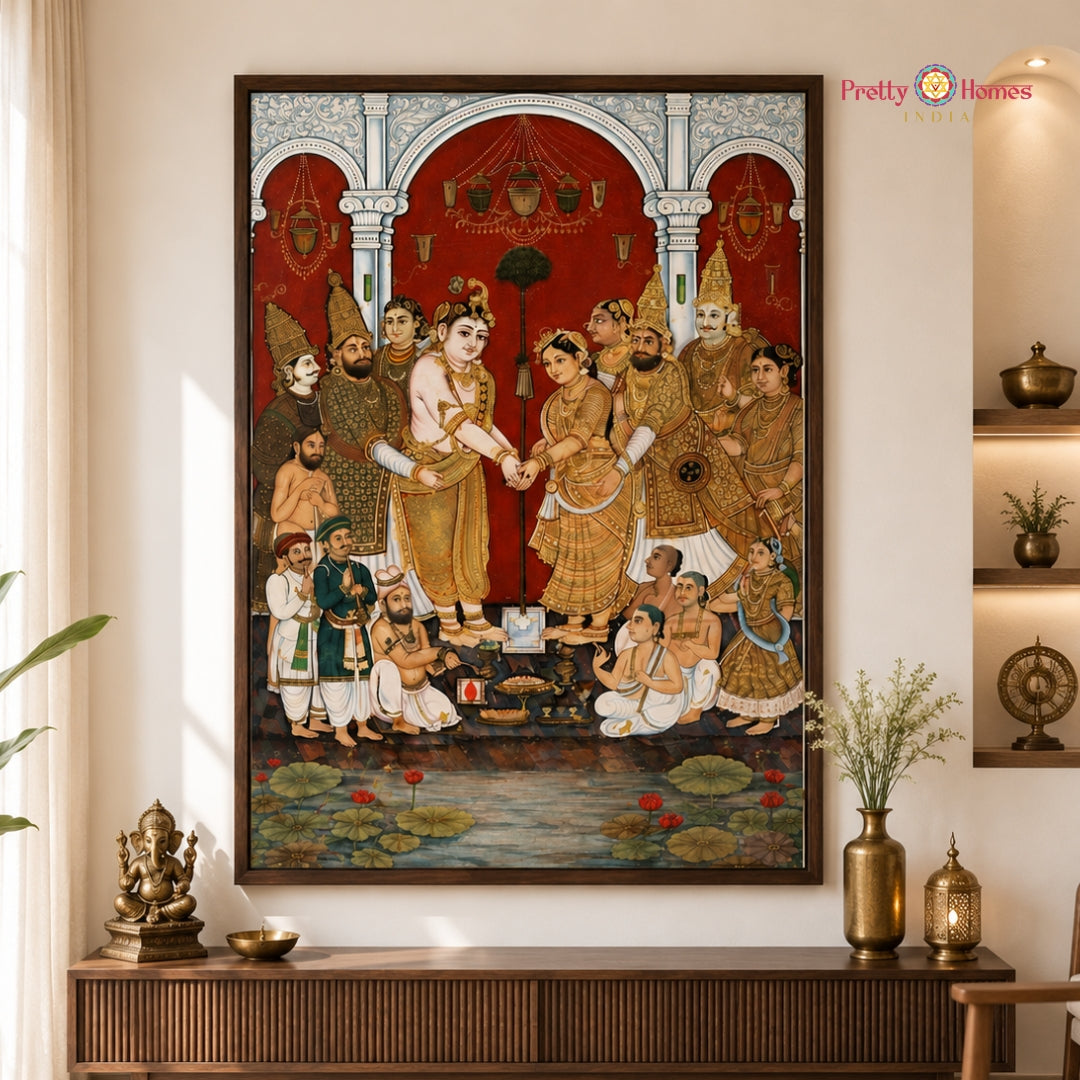
An antique Tanjore painting represents one of the most refined expressions of South Indian devotional art. Known for its rich surfaces, gold embellishment, and iconic compositions, this tradition continues to hold cultural and aesthetic significance.
Whether depicting deities, mythological scenes, or royal forms, each work reflects a disciplined visual language shaped over centuries.
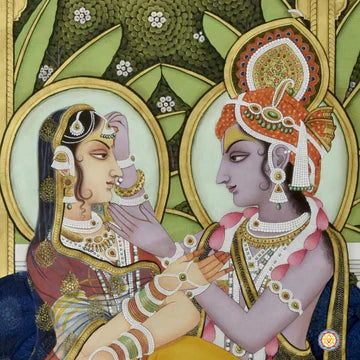
Among its most enduring themes is the Radha Krishna Tanjore painting, where devotion is expressed through symmetry, ornamentation, and symbolic detail. Rooted in temple traditions, they are designed to anchor space with presence and meaning.
What Defines an Antique Tanjore Painting
An antique Tanjore painting is distinguished by its layered construction and use of natural materials. Traditionally executed on wooden panels, the process involves multiple stages that give the artwork its depth and durability.
Key characteristics include:
-
Gold foil work that creates a luminous surface
-
Relief detailing (gesso work) for dimensional ornamentation
-
Natural pigments that retain richness over time
-
Symmetrical compositions centered on the main deity
Over time, genuine antique pieces develop a patina that subtly softens colors while enhancing their visual depth.
Traditional Tanjore Painting: Process and Craft
A traditional Tanjore painting follows a method that has remained largely unchanged:
-
Base preparation on a wooden board with cloth layering
-
Sketching the composition with strict proportional balance
-
Application of gesso to create raised decorative elements
-
Gold leaf placement over embossed areas
-
Hand painting with natural colors
This process results in a surface that is both tactile and visually structured. The emphasis is not realism, but clarity, hierarchy, and devotional focus.
Radha Krishna Tanjore Painting

The Radha Krishna Tanjore painting is among the most recognized subjects in this tradition. The composition typically places Krishna centrally, with Radha in graceful alignment, framed by arches, lotuses, or temple-inspired borders.
Key elements:
-
Balanced posture and frontal alignment
-
Ornamental jewelry rendered in relief and gold
-
Symbolic motifs such as lotus and peacock elements
-
Stillness and symmetry that reinforce devotional focus
These works are often chosen for spaces intended for reflection, including pooja rooms and formal living areas.
Why Antique Tanjore Paintings Remain Relevant
Despite their historical origins, antique Tanjore paintings continue to integrate well into contemporary interiors. Their structured compositions and material richness allow them to function both as sacred objects and as focal design elements.
They are especially suited for:


The enduring appeal lies in their ability to combine craftsmanship, symbolism, and visual discipline in a single format.
An antique Tanjore painting is not defined solely by age, but by adherence to a tradition of form, material, and intent. Whether one chooses a traditional Tanjore painting or a Radha Krishna Tanjore painting, the value lies in its clarity of composition and the continuity of its craft.
When selected thoughtfully, it becomes more than artwork, it becomes a stable and meaningful presence within a space.
Frequently asked questions:
1. What is an antique Tanjore painting?
An antique tanjore painting is a traditional South Indian artwork made on a wooden base with gold foil and raised detailing, typically depicting Hindu deities in a symmetrical composition.
2. What makes a traditional Tanjore painting unique?
A traditional tanjore painting is defined by its layered process; gesso relief work, gold leaf application, and hand-painted natural pigments, creating a rich, textured surface.
3. How can you tell if a Tanjore painting is high quality?
Look for even gold application, precise detailing, strong symmetry, and clean finishing. Handcrafted variations are normal, but the structure should remain balanced.
4. Where should you place a Tanjore painting at home?
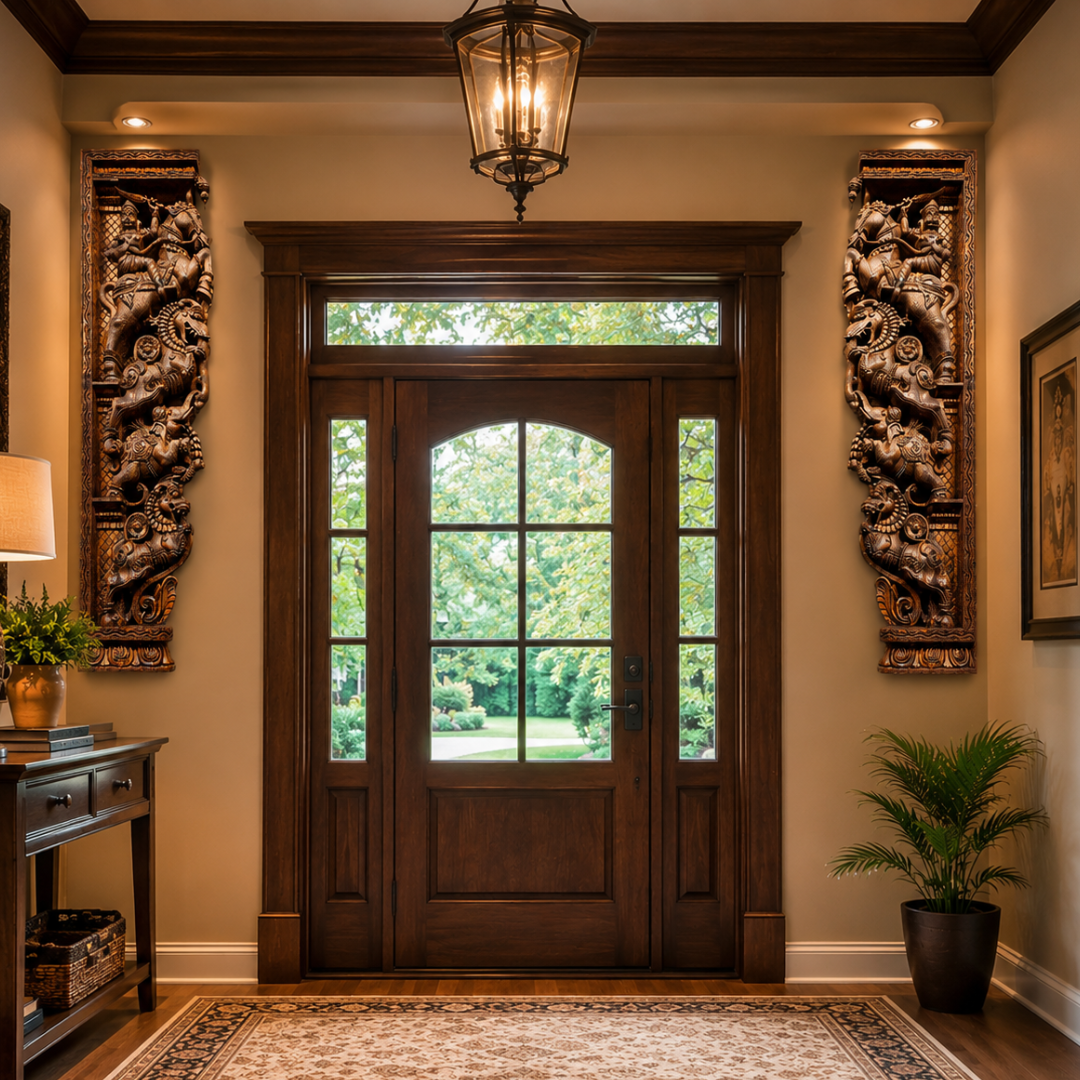
They are best suited for pooja rooms, living room focal walls, or entry spaces where the artwork can remain visually unobstructed.